
Awkward. Brilliant. Unmatched.
Awkward. Brilliant. Unmatched.

Behold the Citroën 2CV
Lower your head before a masterpiece of improbable engineering. If God had designed cars, He almost certainly wouldn’t have drawn a 2CV. And yet—He would have been wrong.
By any rational measure, it’s a terrible idea. It’s slow enough to make time yawn, powered by an asthmatic, air-cooled flat-twin that chatters like cutlery in a drawer. It leans outrageously in corners, smells faintly of fuel and nostalgia, and rattles as if every bolt is considering early retirement. The suspension is so soft it feels like driving a hammock across continents, and after a full day behind the wheel your spine will file a formal complaint. It breaks down with the emotional regularity of a toddler denied sweets.
And somehow—miraculously—that’s exactly why it’s perfect.
The 2CV floats over roads that defeat modern cars, shrugs at potholes, and turns mechanical suffering into a form of poetry. It is not fast, not refined, and certainly not sensible. But it is freedom on four skinny wheels, the ultimate tool for crossing thousands of kilometers fueled by curiosity, stubbornness, and blind optimism. A rolling contradiction: gloriously unstylish, defiantly elegant, and utterly unmatched.
The Citroën 2CV is an automotive icon—one that defied its era both mechanically and culturally.
engineering and design
From an engineering standpoint, the 2CV is disarmingly simple yet brilliantly intentional. Front-wheel drive, an air-cooled two-cylinder boxer engine, a manual gearbox, and an unusually long suspension travel with interconnected front and rear springs. This setup allowed it to float across broken roads and muddy fields without sacrificing comfort. Every component serves a purpose: ease of maintenance, low weight, durability, and absolute reliability. Nothing more, nothing less.
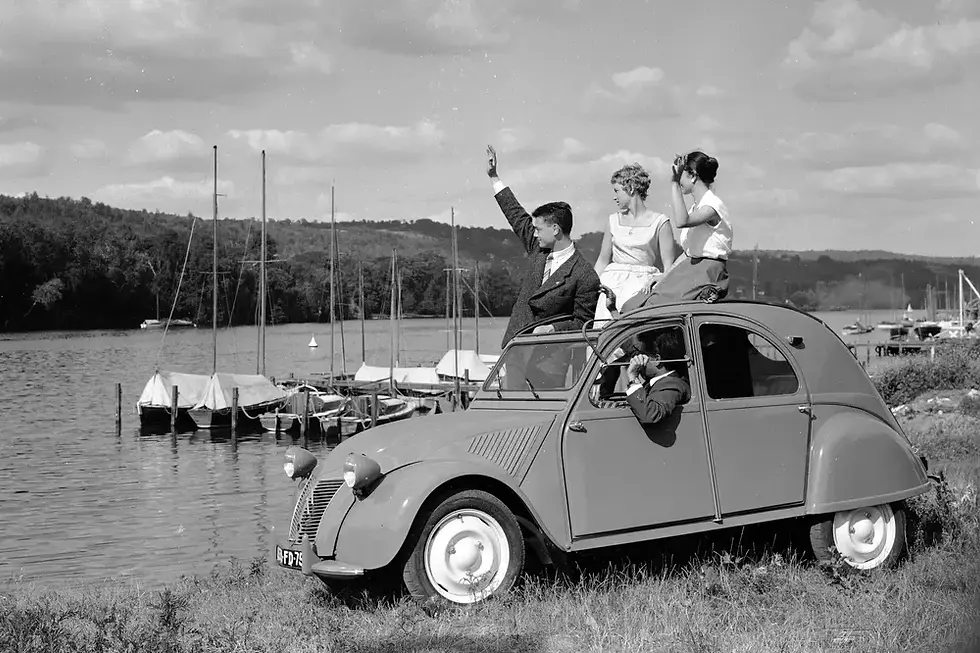
Its design pushes functionality to the edge of rebellion. Thin sheet metal. A roll-back canvas roof. Removable seats. Bare-bones instrumentation. The 2CV was never meant to be beautiful—it was meant to work, to be affordable, and to be efficient. And in that ruthless honesty, it found a silhouette that became unmistakable.

HISTORY
The 2CV was conceived before the Second World War as a solution to a very real problem: affordable mobility for rural France. The design brief became legendary—transport four farmers and 50 kilos of potatoes across a plowed field without breaking a basket of eggs. In 1948, the car was officially unveiled. With only minor changes, it remained in production until 1990—a testament to how right they got it the first time.
the 2CV aka nostalgia
The 2CV stirs nostalgia because it stands for simplicity, freedom, and humanity. It is slow, mechanically vocal, and demands engagement from its driver. You don’t glide through the world unnoticed—you participate in it.
For many, it was a first car, a road-trip companion, or a student’s loyal escape machine. More than that, it represents a time when technology was understandable and cars had personalities. The 2CV is not a status symbol. It is a reminder of carefree days, stubborn individuality, and the quiet joy of going your own way—no matter how long it takes.
